

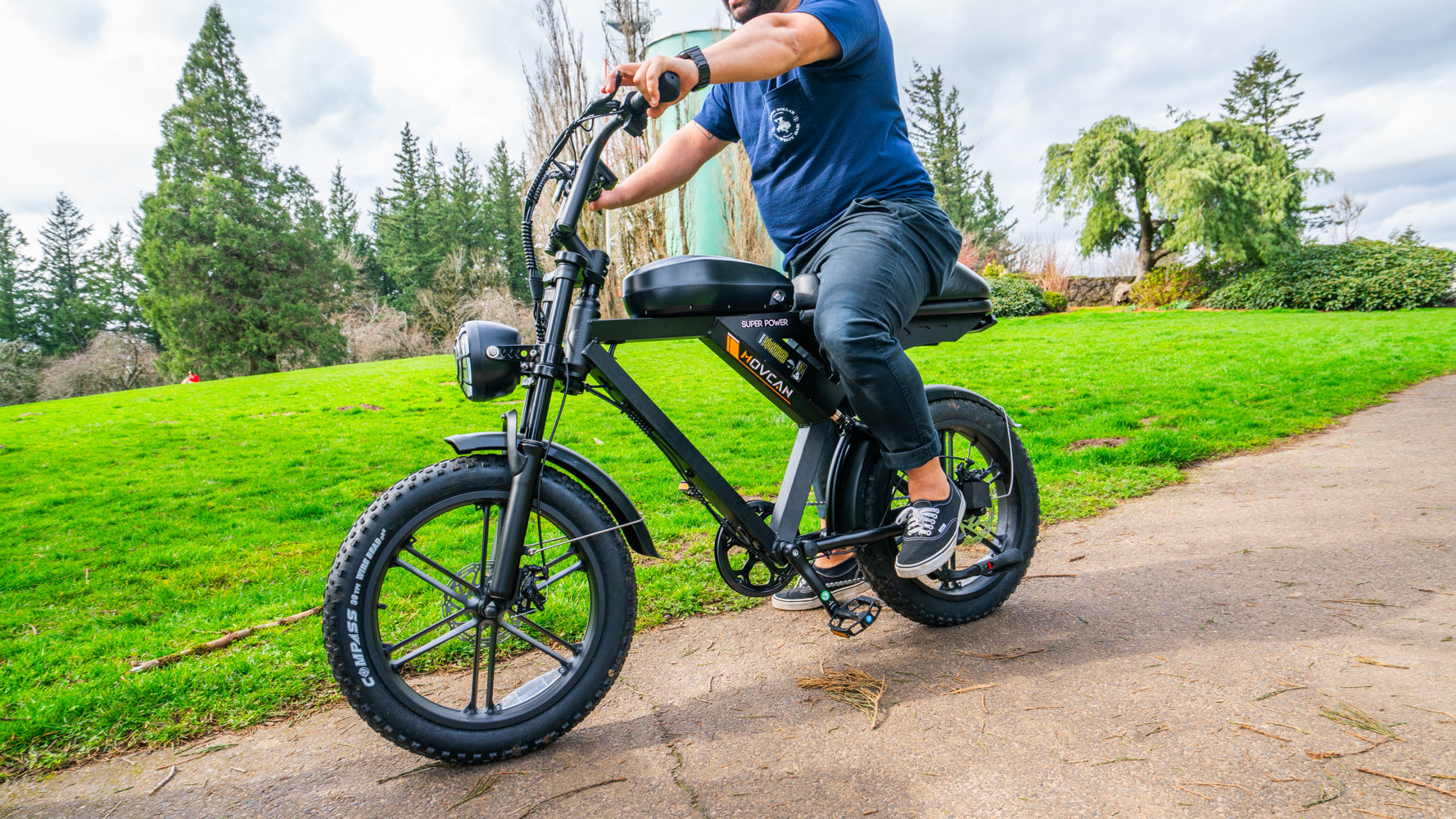
Electric bikes have changed the way millions of people commute, exercise, and explore the outdoors. They're faster than walking, easier than traditional bicycles, and make cycling accessible to riders of all fitness levels.
But there's one question many first-time riders still ask:
Can you actually lose weight riding an electric bike?
The short answer is yes.
Although an e-bike's motor provides assistance while you ride, you're still pedaling, raising your heart rate, and burning calories. In fact, because electric bikes make longer rides and daily cycling more enjoyable, many people end up exercising more consistently than they would on a regular bike.
Whether your goal is to shed a few pounds, improve your fitness, or simply become more active, an electric bike can be a surprisingly effective tool. The key isn't avoiding the motor—it's learning how to use it to stay active and ride more often.
In this guide, we'll break down how riding an electric bike supports weight loss, how many calories you can burn, and a few simple habits that can help you get the most from every ride.
How Does an Electric Bike Help You Lose Weight?

The basic principle of weight loss hasn't changed: you need to burn more calories than you consume over time.
An electric bike helps you create that calorie deficit by encouraging more physical activity without making every ride exhausting.
Unlike a motorcycle or scooter, most electric bikes still require you to pedal. The motor simply amplifies your effort through pedal assist, making hills easier to climb and long rides less intimidating.
Because riding feels easier, most people naturally:
-
Ride more frequently
-
Ride farther than they would on a traditional bicycle
-
Replace short car trips with cycling
-
Spend more total time being physically active
This increased consistency is one of the biggest reasons e-bikes are surprisingly effective for weight loss.
Do You Still Burn Calories on an E-Bike?
Absolutely.
Even when the motor is assisting, your muscles are still working. Your legs continuously pedal, your core stabilizes your body, and your heart and lungs work to supply oxygen throughout the ride.
The exact number of calories burned depends on several factors, including:
-
Your body weight
-
Riding speed
-
Terrain
-
Wind conditions
-
Pedal assist level
-
Ride duration
As a general guideline:
|
Riding Style |
Estimated Calories Burned Per Hour |
|
High Pedal Assist |
150–250 calories |
|
Moderate Pedal Assist |
250–400 calories |
|
Low Pedal Assist |
400–600+ calories |
These numbers are lower than an intense road cycling workout, but they come with an important advantage:
Most people can comfortably ride an e-bike for much longer.
Instead of struggling through a difficult 30-minute workout, many riders happily spend an hour or more on an e-bike. Over the course of a week, that often leads to greater overall calorie expenditure.
Why E-Bikes Can Be Better Than Traditional Bikes for Beginners

Many people believe traditional bicycles are always better for fitness.
While they certainly require more effort, that doesn't necessarily make them better for everyone.
One of the biggest challenges in losing weight isn't exercising harder—it's exercising consistently.
Traditional bikes can be intimidating for people who:
-
Are overweight
-
Haven't exercised in years
-
Have knee discomfort
-
Live in hilly areas
-
Feel discouraged by difficult rides
An electric bike removes many of these barriers.
Instead of worrying about getting exhausted halfway through the ride, you can simply increase the assist level and keep going. That confidence often leads to a routine that lasts months or years rather than a few weeks.
How to Maximize Weight Loss While Riding an E-Bike
If your goal is fitness instead of simply commuting, a few adjustments can significantly increase your calorie burn.
1. Use Lower Pedal Assist Levels
Resist the temptation to stay in the highest assist mode all the time.
Eco mode or low assist requires your legs to contribute much more of the work while still making the ride enjoyable.
You'll burn more calories without feeling overwhelmed.
2. Pedal Instead of Using the Throttle
Many Class 2 electric bikes include a throttle.
While the throttle is useful when starting from a stop or climbing a particularly steep hill, relying on it throughout the ride greatly reduces your physical effort.
Whenever possible, let your legs do most of the work and use the throttle only when necessary.
3. Ride Longer Rather Than Faster
You don't need to ride at racing speeds.
A comfortable 45–60 minute ride often burns more calories than an intense 20-minute sprint because you stay active for a longer period.
Consistency and duration usually matter more than maximum speed.
4. Include Hills Whenever Possible
Climbing hills naturally increases your heart rate and engages larger muscle groups.
Even with pedal assist, you'll work harder on inclines than on flat roads.
The motor simply keeps the climb manageable rather than effortless.
5. Ride Several Times Every Week
Weight loss doesn't come from one long weekend ride.
Aim for:
-
30–60 minutes per ride
-
3–5 rides each week
-
A mix of commuting, recreational rides, and fitness rides
Over time, these regular sessions add up to thousands of extra calories burned.
Other Health Benefits Beyond Weight Loss

Even if the number on the scale changes slowly, regular e-bike riding offers many additional health benefits.
These include:
-
Improved cardiovascular fitness
-
Stronger leg muscles
-
Better endurance
-
Reduced stress levels
-
Improved mood
-
Better joint-friendly exercise compared to running
-
Increased daily physical activity
For many riders, these benefits become noticeable long before significant weight loss occurs.
Choosing the Right E-Bike for Fitness
A fitness-friendly electric bike should encourage you to pedal rather than doing all the work for you.
Look for features such as:
-
Multiple pedal assist levels
-
Responsive pedal-assist system
-
Comfortable riding position
-
Reliable battery for longer rides
-
Stable tires for confidence on different surfaces
Commuter e-bikes are ideal for everyday riding, while fat tire electric bikes provide additional comfort and stability on rough roads, gravel, and light trails.
Whether you choose a lightweight commuter or a powerful fat tire model, the best e-bike is ultimately the one you'll enjoy riding consistently.
Is an E-Bike Enough to Lose Weight?
An electric bike can absolutely help you lose weight, but it works best when combined with healthy lifestyle habits.
For the best results:
-
Eat a balanced diet with appropriate calorie intake.
-
Stay hydrated before and after rides.
-
Ride consistently throughout the week.
-
Gradually increase ride distance and duration.
-
Get enough sleep to support recovery.
Remember, sustainable weight loss isn't about finding the hardest workout—it's about building habits you can maintain for months and years.
Final Thoughts
So, can you lose weight riding an electric bike?
Yes.
An electric bike may provide motor assistance, but it still encourages movement, burns calories, and improves overall fitness. In fact, because e-bikes make cycling easier and more enjoyable, many people end up riding more often than they ever would on a traditional bicycle.
That's the real secret.
The best exercise isn't necessarily the most intense—it's the one you'll keep doing. If an e-bike helps you replace short car trips, explore new routes, or simply look forward to getting outside, it can become one of the most effective tools for long-term weight management.
Instead of asking whether an electric bike is "good enough" exercise, a better question is:
Will it help you stay active week after week?
For most riders, the answer is a confident yes.
FAQs
Can you lose belly fat by riding an electric bike?
Yes. While you can't target belly fat specifically, regular e-bike riding helps create a calorie deficit that reduces overall body fat, including abdominal fat, when combined with a healthy diet.
Is an electric bike good exercise?
Yes. Riding an electric bike raises your heart rate, engages your leg and core muscles, and provides low-impact cardiovascular exercise that's suitable for beginners and experienced cyclists alike.
How often should I ride an e-bike to lose weight?
Aim for at least 30–60 minutes per ride, three to five times per week. Consistent riding over several months is more effective than occasional long rides.
Do you burn fewer calories on an e-bike than on a regular bike?
Generally yes, because the motor provides assistance. However, many riders spend more time on an e-bike and ride more frequently, which can lead to similar—or even greater—total weekly calorie burn.
Should I use the throttle if my goal is weight loss?
It's best to use the throttle only when needed, such as starting from a stop or climbing a steep hill. Pedaling with low or moderate assist levels burns significantly more calories.
What's the best type of electric bike for fitness?
A commuter or hybrid electric bike with multiple pedal assist levels is ideal for most riders. If you frequently ride on gravel, dirt paths, or uneven roads, a fat tire electric bike offers additional comfort and stability while still providing an excellent workout.