

Why E-Bike Commuting Is Surging in Popularity
The statistics tell a compelling story: according to recent transportation research, e-bike sales have increased by 372% since 2019, with commuting cited as the primary use case for over 65% of electric bike owners. This remarkable growth isn't surprising when you consider the advantages:
- Average commute times reduced by 23% compared to car travel in congested urban areas
- 78% reduction in transportation-related carbon footprint compared to car commuters
- 47% of new e-bike commuters report improved mental health and reduced stress levels
- Annual savings of $2,000-$5,000 when replacing a car with an e-bike for daily commuting
Beyond the numbers, the qualitative benefits are equally impressive. E-bike commuters consistently report enjoying their commutes rather than merely enduring them – a profound shift in how we experience a significant portion of our workday.
Essential Components of an Effective E-Bike Commuter Setup
Creating the ideal commuting experience requires thoughtful consideration of several key elements. Let's break down the components of a truly effective setup:
The Foundation: Selecting the Right E-Bike for Commuting
Not all electric bikes are created equal when it comes to daily commuting needs. Here's what to prioritize:
Key Features for Commuter-Friendly E-Bikes
- Frame Design: Step-through or low-step frames enable easier mounting/dismounting in work attire
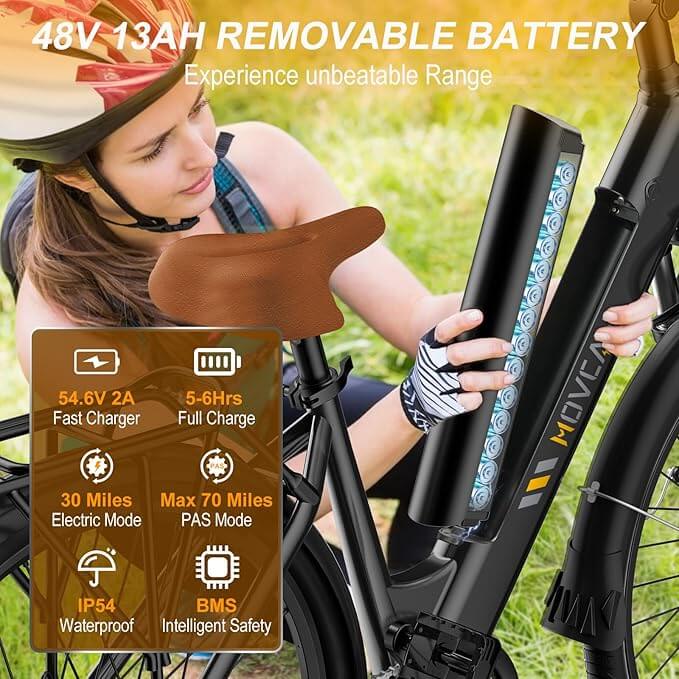
- Battery Range: Minimum 40-mile range (ideally 60+) to accommodate round-trip commutes with margin
- Motor Placement: Mid-drive motors offer better balance and hill-climbing ability for varied terrain
- Weather Readiness: Integrated fenders, chain guards, and weather-resistant components
- Cargo Capacity: Built-in racks or mounting points for panniers and bags
Movcan's City Commuter models are specifically engineered with these commuter-centric features, particularly the all-weather reliability that daily riders depend on.
Essential Accessories for the Serious E-Bike Commuter
According to a 2024 survey of e-bike commuters, these accessories were rated most valuable for daily rides:
Safety & Security (Non-Negotiables)
- High-Visibility Lighting: 360-degree visibility with front (500+ lumens) and rear lights
- Premium Locking System: Minimum of two locks (primary U-lock and secondary cable/chain)
- GPS Tracking: Discreet location trackers that integrate with smartphone apps
- Custom Helmet: Well-ventilated, comfortable design that works with professional hairstyles
- Safety Reflectors: Additional passive visibility elements for dawn/dusk commuting
Comfort & Convenience Enhancers
- Climate-Appropriate Gear: Lightweight rain suits, wind-resistant gloves, and layering options
- Ergonomic Upgrades: Suspension seatposts, padded grips, and optimized riding position adjustments
- Quick-Release Storage: Weatherproof panniers with laptop compartments and professional aesthetics
- Hydration Solutions: Spill-proof, easy-access water bottle systems that integrate with the frame
Building the Perfect E-Bike Commuter Bag System
Transporting work essentials requires more thought than simply throwing items into a backpack. The most efficient commuters develop a systematic approach to organization:
The 3-Zone System for Commuter Organization
- Quick-Access Zone: Items needed during the ride (keys, phone, wallet, transit cards)
- Work Essentials Zone: Laptop, documents, and professional items kept separate and protected
- Variable Needs Zone: Space for clothing changes, lunch containers, and day-specific items
Rather than a single bag solution, consider a modular approach. Ortlieb's waterproof pannier system consistently ranks highest in commuter satisfaction surveys, offering perfect protection even in unexpected downpours.
Tech Integration for the Modern E-Bike Commuter
The modern commuter leverages technology to enhance safety, efficiency, and enjoyment:
Must-Have Tech for Optimized Commuting
- Smart Navigation: Handlebar-mounted, weather-resistant GPS units with commuter-specific routing
- Ride Tracking: Apps that log commuting distances for fitness and potential tax benefits
- Safety Communication: Bluetooth-enabled helmets for hands-free calls and situational awareness
- Environmental Monitoring: Air quality sensors that recommend route adjustments on high-pollution days
- Integrated E-Bike Apps: Battery management and diagnostic tools for preventative maintenance
According to Transportation Alternatives, e-bike commuters who incorporate smart navigation see a 31% reduction in route-finding stress and save an average of 7.5 minutes per commute through optimized pathfinding.
Transforming Your Arrival Experience
The commute doesn't end when you reach your destination – the transition from rider to professional deserves attention:
Creating a Seamless Arrival System
- Pre-Arrival Cooldown: Reducing speed in the final mile to minimize perspiration
- Destination Essentials Kit: Compact grooming supplies for quick refreshing
- Clothing Strategy: Wrinkle-resistant fabrics or on-site clothing storage solutions
- Security Protocol: Consistent, secure parking location with easy access to workplace
- Power Management: Strategic battery charging during work hours for the return trip
"The most successful e-bike commuters don't just plan their ride; they design their entire door-to-door experience." - E-Bike Commuting Quarterly
Weatherproofing Your E-Bike Commuting Experience
Climate challenges represent the most frequently cited obstacle to year-round e-bike commuting. Here's how dedicated commuters overcome these barriers:
Season-Specific Adaptations
Winter Commuting Essentials
- Studded Tires: Essential for ice and packed snow conditions
- Extended Battery Care: Insulation covers and charging protocol adjustments for cold weather
- Visibility Upgrades: Additional lighting to compensate for shorter daylight hours
- Layering Systems: Breathable, windproof outer layers that prevent overheating during exertion
Summer Optimization
- UV Protection: Sunscreen application strategies that work for professionals
- Cooling Solutions: Phase-change cooling vests and breathable materials for temperature regulation
- Hydration Systems: Insulated water storage that maintains cool temperatures during hot commutes
- Electronics Protection: Heat-shielding cases for smartphones and other temperature-sensitive devices
The Economics of E-Bike Commuting
The financial advantages of e-bike commuting extend far beyond the obvious fuel savings:
Complete Cost Comparison: E-Bike vs. Car Commuting (Annual)
| Expense Category | E-Bike Commuter | Car Commuter | Potential Savings |
|---|---|---|---|
| Vehicle Cost | $1,500-3,500 (amortized) | $3,000-8,000 (amortized) | $1,500-4,500 |
| Energy/Fuel | $30-50 (electricity) | $1,200-2,400 (gas) | $1,150-2,350 |
| Parking | $0-120 | $600-3,600 | $600-3,480 |
| Insurance | $100-300 | $1,000-2,500 | $900-2,200 |
| Maintenance | $150-300 | $500-1,500 | $350-1,200 |
| Health Benefits | -$300 to -$500 (reduced healthcare) | $0 | $300-500 |
| TOTAL SAVINGS | $4,800-14,230 |
According to the American League of Bicyclists, these savings increase in dense urban areas with higher parking costs and more significant congestion-related fuel consumption.
E-Bike Commuter Communities and Resources
The growth of e-bike commuting has spawned vibrant communities focused on knowledge sharing and advocacy:
Connecting with Fellow Commuters
- Online Forums: Platforms like r/ebikes and ElectricBikeReview feature dedicated commuter sections
- Route-Sharing Apps: Strava and Komoot groups focused on optimal commuting paths
- Local Advocacy Groups: Organizations working to improve infrastructure for e-bike commuters
- Manufacturer Communities: Brand-specific forums where owners share model-specific optimization tips
Conclusion: The Future of E-Bike Commuting
As urban infrastructure continues to adapt to the growing popularity of e-bikes, commuters can expect even more benefits in the coming years. Recent research from the Urban Transportation Research Center projects that cities investing in protected bike lanes see a 71% increase in bicycle commuting within the first three years – creating safer, more enjoyable experiences for all riders.
The transformation from occasional e-bike user to committed daily commuter typically takes just 30 days of consistent riding. During this adaptation period, the brain forms new habits, the body develops commute-specific fitness, and the practical logistics of the routine become second nature.
Whether you're just beginning to consider an e-bike for your daily commute or looking to optimize your existing setup, remember that each small improvement compounds to create a dramatically better experience. The perfect commuter setup isn't about having every accessory – it's about thoughtfully selecting the elements that address your specific needs and route challenges.
Ready to transform your daily commute? Explore Movcan's commuter-focused e-bike collection and discover how the right electric bike can revolutionize your relationship with daily transportation.