

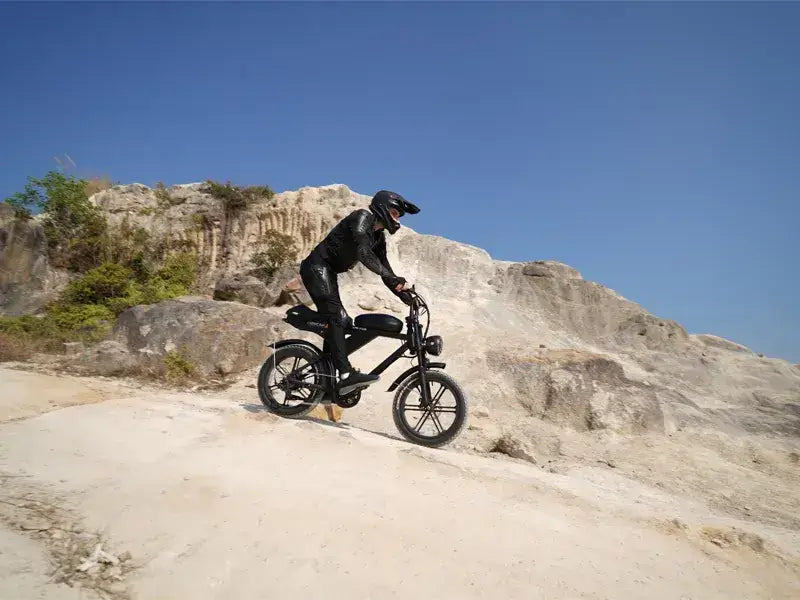
The electric bike industry is undergoing a transformative shift in 2025, with manufacturers intensely focused on addressing one of the most persistent challenges: weight. Gone are the days when e-bikes were synonymous with bulky frames and cumbersome batteries. Today's cutting-edge models are leveraging revolutionary materials, miniaturized components, and intelligent design to deliver unprecedented performance in increasingly lightweight packages.
Table of Contents
- The Weight Challenge: Why Lightweight E-Bikes Matter
- Battery Innovations: Smaller, Lighter, More Powerful
- Motor Technology: Compact Powerhouses
- Frame Materials: The Carbon Revolution
- Integration and Design: Hiding the Technology
- Real-World Examples: Today's Lightest E-Bikes
- The Future: What's Coming Next
- The Movcan Approach to Lightweight E-Bikes
The Weight Challenge: Why Lightweight E-Bikes Matter
The push toward lighter e-bikes isn't merely about aesthetics or bragging rights—it addresses fundamental rider needs and expands the potential market for electric bicycles.
The Benefits of Lighter E-Bikes
- Improved Handling and Maneuverability: Lighter e-bikes are easier to control, especially in urban environments requiring frequent stops and tight turns.
- Extended Range: Less weight means the motor doesn't need to work as hard, which translates to better battery efficiency and longer rides.
- Easier Transportation: A lighter e-bike is more portable—crucial for commuters who need to carry their bikes up stairs or lift them onto racks.
- Better Non-Assisted Riding: When the battery is depleted or assistance is turned off, a lightweight e-bike rides more like a conventional bicycle.
- Broader Appeal: As e-bikes become lighter, they attract traditional cyclists who previously rejected electric assistance due to weight concerns.
The Technical Challenge
The difficulty in creating lightweight e-bikes lies in the fundamental components that make them electric: batteries and motors add substantial weight. A typical e-bike battery can weigh 5-10 pounds, while motors add another 6-8 pounds—before considering the reinforced frames needed to support these components.
Battery Innovations: Smaller, Lighter, More Powerful
Battery technology is at the forefront of the lightweight revolution, with several key innovations emerging in 2025.
Higher Energy Density Cells
The latest generation of lithium-ion batteries delivers significantly higher energy density—storing more power in less space and with less weight. Manufacturers are now incorporating cells that provide up to 30% more energy per pound compared to just two years ago.
Some 2025 models now feature advanced materials like carbon fiber and lightweight aluminum alloys, which maintain strength while reducing overall weight. These improvements enable longer ranges without increasing battery size.
Strategic Battery Placement and Integration
Rather than using a single large battery pack, innovative designers are distributing smaller battery units throughout the frame. This approach not only reduces weight concentration but also improves the bike's balance and handling characteristics.
Solid-State Battery Technology
While not yet mainstream, solid-state batteries represent the next frontier in e-bike power. These batteries replace the liquid electrolyte in traditional lithium-ion cells with a solid compound, offering numerous advantages:
- 20-30% higher energy density
- Faster charging capabilities
- Better performance in extreme temperatures
- Enhanced safety with lower risk of fire
- Longer overall lifespan
Several high-end e-bike manufacturers are beginning to incorporate limited solid-state technology in their 2025 models, with broader adoption expected in the coming years.
Motor Technology: Compact Powerhouses
E-bike motors have undergone a remarkable transformation, moving from bulky additions to streamlined, integrated components that deliver more power while taking up less space.
The Rise of Mid-Drive Motors
Mid-drive motors, positioned at the bike's bottom bracket, have become the preferred option for lightweight performance e-bikes. Companies like Bosch (with their CX Performance Line), Shimano (with the EP8), and Mahle (with the X35) are leading the charge with smaller, more efficient systems that promise greater power in more compact packages.
These motors provide several advantages:
- Better weight distribution and center of gravity
- More efficient power delivery through the bike's gears
- Natural riding feel that closely resembles a conventional bicycle
Hub Motors: A Lightweight Alternative
While mid-drive motors dominate the high-performance sector, the latest generation of hub motors offers compelling lightweight options for urban and commuter e-bikes. Located in the center of the front or rear wheel, these motors have seen dramatic size and weight reductions.
The Trek Dual Sport+ 2 Stagger demonstrates how effective modern hub motors can be, weighing just 38 pounds total with a sleek integrated battery while still delivering a 35-mile range.
Motor Materials and Efficiency
The latest motors utilize advanced materials like neodymium magnets and specialized aluminum alloys to reduce weight while improving power output. Equally important are gains in motor efficiency, which allow manufacturers to maintain performance while using smaller, lighter motors.
Frame Materials: The Carbon Revolution
Frame construction represents one of the most significant areas of weight reduction in modern e-bikes, with carbon fiber leading the charge toward truly lightweight electric bicycles.
Carbon Fiber Construction
Once limited to high-end road racing bikes, carbon fiber has become increasingly common in e-bike frames. The material offers an unmatched strength-to-weight ratio, allowing designers to create frames that are both lighter and stronger than their aluminum counterparts.
The 2025 e-bike lineup features models with frames made from carbon or magnesium alloys, combined with more powerful yet compact motor systems and extended battery ranges.
Strategic Reinforcement
Modern carbon e-bike frames utilize strategic reinforcement—adding material only where necessary to handle the additional stresses of motors and batteries. This targeted approach maintains structural integrity while minimizing excess weight.
Alternative Materials
While carbon fiber dominates the premium lightweight segment, other innovative materials are making inroads:
- Magnesium Alloys: Offering better vibration damping than aluminum with comparable weight
- Titanium: Providing exceptional durability and comfort with moderate weight savings
- Advanced Aluminum Formulations: Delivering improved strength-to-weight ratios over traditional aluminum frames
Integration and Design: Hiding the Technology
Beyond material advances, the lightweight revolution in e-bikes is equally driven by clever integration and streamlined design approaches.
Integrated Batteries
The latest e-bikes feature batteries that are completely integrated within the frame, often becoming virtually invisible. This approach offers multiple benefits:
- Improved aerodynamics
- Better weight distribution
- Enhanced aesthetic appeal
- Protected from the elements
- Secure from theft
Hidden Wiring and Components
Internal cable routing has become standard on premium e-bikes, with control wires and hydraulic lines running inside the frame. This not only creates a cleaner look but also protects critical components from damage.
Simplified Controls and Displays
The bulky displays of earlier e-bikes are giving way to minimalist interfaces. Many 2025 models feature:
- Compact, integrated LED displays
- Handlebar-mounted control units that add minimal weight
- Smartphone integration that eliminates the need for separate displays entirely
Real-World Examples: Today's Lightest E-Bikes
The lightweight e-bike revolution is best illustrated through concrete examples of what's possible with today's technology.
Road E-Bikes: Breaking the 30-Pound Barrier
The Ride1UP CF Racer1 stands out as one of the lightest electric bikes that doesn't require an extreme budget, featuring carbon fiber construction and weighing just 28.6 pounds while still delivering a 40-mile range.
Road-focused e-bikes have seen the most dramatic weight reductions, with several models now weighing under 30 pounds—approaching the weight of traditional non-electric performance bicycles.
Commuter E-Bikes: Practical and Portable
Commuter-focused e-bikes have also benefited from the lightweight revolution. Models like the Specialized Turbo Vado SL combine everyday practicality with weights under 40 pounds, making them manageable for apartment dwellers and public transit users.
Mountain E-Bikes: Power Without the Penalty
Even mountain e-bikes, which require robust construction to handle off-road abuse, have seen significant weight reductions.
The latest full-power eMTBs now weigh between 20-22 kg (44-48.5 lbs) while delivering 150-160mm of travel, approaching the weight of light eMTBs but with more powerful motors and bigger batteries.
The Future: What's Coming Next
The lightweight revolution in e-bikes shows no signs of slowing, with several emerging technologies poised to drive further weight reductions.
Higher-Density Energy Storage
Research into advanced battery chemistries promises to deliver even higher energy densities, potentially doubling current capacities without increasing weight.
Regenerative Braking
Some manufacturers are exploring regenerative braking systems similar to those used in Formula 1 racing, which capture energy during braking and feed it back into the battery, extending range without adding battery weight.
AI-Driven Efficiency
Artificial intelligence is being integrated into e-bike systems to optimize power consumption based on riding behavior and terrain, enabling smaller batteries while maintaining practical ranges.
3D-Printed Components
Additive manufacturing techniques allow for the creation of complex, weight-optimized components that would be impossible to produce using traditional methods.
The Movcan Approach to Lightweight E-Bikes
At Movcan, we're embracing the lightweight revolution while ensuring our e-bikes remain practical, durable, and accessible. Our 2025 lineup reflects this balanced approach.
Our Lightweight Philosophy
We believe that meaningful weight reduction must not come at the expense of reliability, range, or rider comfort. Our design process targets "smart weight"—eliminating unnecessary grams while preserving the features that make e-bikes so practical.
The Movcan Aero Series
Our flagship lightweight offering, the Movcan Aero Series, incorporates many of the advanced technologies discussed in this article:
- Carbon fiber main frame with strategic reinforcement
- Compact 500W mid-drive motor with 50Nm of torque
- Distributed battery system that maintains perfect weight balance
- Fully integrated cables and components
- Total weight under 35 pounds
Technology Within Reach
While some lightweight e-bikes come with premium price tags, we're committed to making this technology accessible. Our Movcan Urban Commuter brings many lightweight innovations to a more affordable price point:
- Hydroformed aluminum frame with weight-optimized tubing
- Compact rear hub motor system
- Partially integrated battery design
- Weight under 40 pounds
Conclusion
The lightweight revolution in e-bikes represents a convergence of technological innovations across batteries, motors, materials, and design. As e-bikes continue to shed pounds while maintaining or improving performance, they become increasingly versatile tools for transportation, recreation, and fitness.
This evolution is making e-bikes accessible to new audiences while enhancing the experience for existing riders. Whether you're a commuter looking for something easy to carry upstairs, a road cyclist seeking power without the penalty, or a trail rider wanting agile handling, today's lightweight e-bikes offer compelling options.
As we look toward the future, the boundaries between traditional bicycles and electric models will continue to blur. The lightweight e-bike of 2025 is just the beginning of a transformation that will ultimately redefine what we consider possible in personal transportation.