

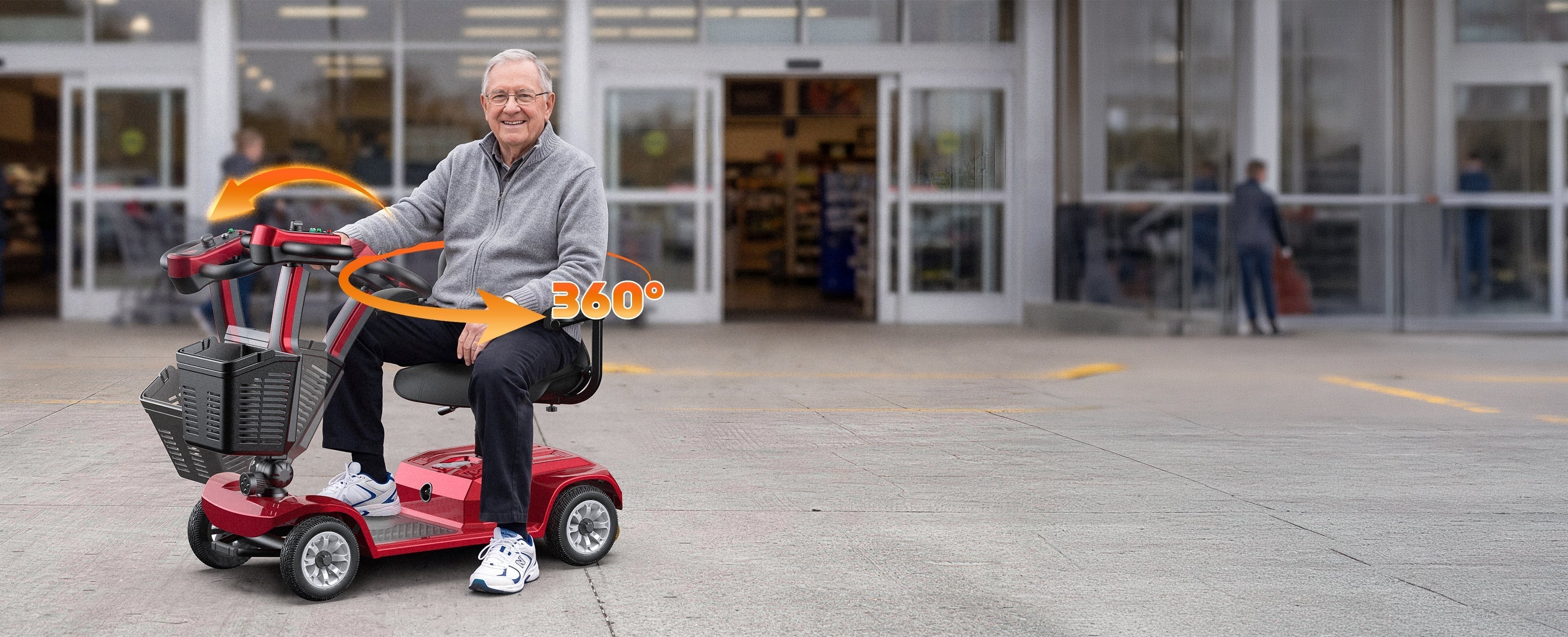
A mobility scooter can make everyday travel easier for seniors and adults with limited mobility. Whether you're using one to move around your neighborhood, go shopping, visit friends, or simply enjoy more independence, learning how to operate it safely is essential.
If you're using a mobility scooter for the first time, don't worry. Most models are designed to be simple and beginner-friendly. However, understanding the controls, practicing basic movements, and following a few important safety rules can help you feel more confident before heading out.
This guide explains how to use a mobility scooter step by step.
1. Get Familiar With Your Mobility 
Before turning on your mobility scooter, take a few minutes to identify the main controls and components.
While the layout may vary depending on the model, most mobility scooters include:
-
Power key or power button – Turns the scooter on and off.
-
Speed control – Allows you to choose a comfortable riding speed.
-
Forward and reverse controls – Controls the direction of travel.
-
Throttle or drive lever – Starts the scooter moving.
-
Brake system – Many mobility scooters automatically slow down and stop when you release the drive lever.
-
Battery indicator – Shows the remaining battery level.
-
Horn – Helps alert pedestrians when necessary.
-
Seat adjustment controls – May allow you to rotate, slide, or adjust the seat.
Always check your owner's manual for the exact controls on your specific model.
2. Check the Battery Before Riding
Before using your mobility scooter, make sure the battery has enough power for your planned trip.
Check the battery indicator after turning on the scooter. If the battery is low, charge it fully before leaving home.
To help avoid running out of power unexpectedly:
-
Charge the scooter according to the manufacturer's instructions.
-
Avoid leaving the battery completely discharged for long periods.
-
Check the battery level before longer trips.
-
Remember that rider weight, hills, temperature, and riding speed can affect actual range.
For example, if you're planning to use your scooter for shopping or outdoor travel, make sure the estimated round-trip distance is within the available battery range.
3. Adjust the Seat and Get Comfortable

Sit comfortably before turning on the scooter.
Adjust the seat position if your mobility scooter allows it. Your back should be supported, and you should be able to comfortably reach the controls without stretching.
Make sure:
-
Both feet are properly positioned on the foot platform.
-
Loose clothing is away from the wheels and moving parts.
-
Bags or personal items are securely stored.
-
You are seated properly before operating the scooter.
Never attempt to get on or off a mobility scooter while it is moving.
4. Start at the Lowest Speed Setting
If this is your first time using a mobility scooter, start with the lowest available speed setting.
Turn on the scooter and gently operate the forward control or drive lever. Most scooters are designed so that the harder you press or pull the control, the faster the scooter moves.
Start slowly and practice in an open, flat area.
Try practicing:
-
Moving forward.
-
Releasing the control to stop.
-
Making gentle left and right turns.
-
Moving in reverse.
-
Stopping near a specific point.
Take your time. You don't need to use the maximum speed until you feel comfortable controlling the scooter.
5. Learn How the Braking System Works
Many mobility scooters use an automatic electromagnetic braking system.
In many cases, the scooter begins to slow down when you release the throttle or drive lever. Once the scooter comes to a complete stop, the braking system helps keep it in position.
However, braking performance can vary depending on the scooter and riding conditions.
Give yourself extra stopping distance when:
-
Riding downhill.
-
Carrying additional weight.
-
Traveling on wet or slippery surfaces.
-
Riding at higher speeds.
Avoid suddenly changing direction or making sharp turns at high speed.
6. Turn Slowly and Carefully

Mobility scooters are generally stable, but sharp turns at high speeds can increase the risk of losing balance or tipping.
When approaching a corner:
-
Reduce your speed before turning.
-
Make smooth steering movements.
-
Keep both hands on the controls when possible.
-
Avoid turning sharply on slopes or uneven surfaces.
A simple rule for beginners is: slow down first, then turn.
This is especially important in stores, parking areas, crowded sidewalks, and other places with pedestrians.
7. Be Careful When Riding on Slopes
Not every hill or ramp is suitable for every mobility scooter.
Before riding on an incline, check your scooter's recommended climbing ability in the owner's manual.
When traveling uphill or downhill:
-
Drive straight whenever possible.
-
Avoid turning across the slope.
-
Reduce your speed.
-
Keep your body properly seated.
-
Avoid sudden acceleration or braking.
Do not attempt steep slopes that exceed your mobility scooter's recommended climbing angle.
If you're unsure whether a slope is safe, choose another route.
8. Watch Out for Curbs and Uneven Surfaces
Small obstacles can feel much larger when you're riding a mobility scooter.
Be cautious around:
-
Curbs.
-
Potholes.
-
Uneven sidewalks.
-
Loose gravel.
-
Wet leaves.
-
Grass or soft ground.
Whenever possible, use wheelchair ramps or designated curb cuts instead of attempting to climb a curb.
Avoid crossing large obstacles at an angle, as this may affect the scooter's balance.
9. Use Reverse Slowly

Reverse mode is useful for backing away from tables, walls, or tight spaces, but it should always be used carefully.
Before reversing:
-
Look behind you.
-
Make sure there are no people, pets, or obstacles in your path.
-
Use the lowest possible speed.
-
Move slowly.
Never rely only on mirrors or warning sounds. Always check the area around your mobility scooter before moving.
10. Follow Local Rules and Ride Responsibly
Rules for mobility scooters can vary depending on where you live.
Before using your scooter on sidewalks, roads, bike paths, or public spaces, check your local regulations.
In general, you should:
-
Give pedestrians plenty of space.
-
Slow down in crowded areas.
-
Follow signs and local traffic rules.
-
Avoid distracted riding.
-
Stay aware of vehicles when crossing driveways or intersections.
Remember that cars may not always notice a mobility scooter, especially in parking lots or busy areas. Make yourself visible and remain alert.
11. How to Park and Turn Off a Mobility Scooter
When you reach your destination, choose a flat and stable surface.
To park safely:
-
Bring the scooter to a complete stop.
-
Release the drive control.
-
Turn off the power.
-
Remove the key if your scooter uses one.
-
Make sure the scooter is secure before getting off.
Avoid parking where your mobility scooter could block entrances, ramps, sidewalks, or emergency exits.
12. Basic Mobility Scooter Maintenance
Regular maintenance can help keep your mobility scooter operating safely.
Before riding, occasionally check:
-
Battery level and charging connection.
-
Tire condition.
-
Brakes and stopping performance.
-
Lights and horn, if equipped.
-
Seat and armrest stability.
-
Any unusual noises or loose components.
Keep the scooter clean and dry, especially after riding outdoors.
If you notice a major change in performance, reduced range, unusual sounds, or problems with steering or braking, stop using the scooter until the issue has been inspected.
Movcan Mobility Scooters for Everyday Independence
Choosing a mobility scooter that matches your daily needs can make the learning process easier.
Movcan offers mobility scooters designed for convenient everyday transportation, whether you need a compact option for short trips or a more comfortable model with additional range.
When choosing a mobility scooter, consider:
-
Your typical travel distance.
-
Your preferred speed.
-
Rider weight capacity.
-
Storage and portability needs.
-
Where you plan to ride.
-
Comfort and seating requirements.
A model with a longer range may be more suitable for regular outdoor trips, while a compact and affordable mobility scooter may be a practical option for shorter daily transportation.
Frequently Asked Questions
Is a mobility scooter easy to use?
Yes. Most mobility scooters are designed to be beginner-friendly. After learning the basic controls and practicing at a low speed in an open area, many riders can quickly become comfortable with everyday operation.
Do you need a license to use a mobility scooter?
In many locations, a driver's license is not required for a mobility scooter. However, laws and regulations vary by state, city, and country. Always check the local rules where you plan to ride.
How fast can a mobility scooter go?
Speed depends on the specific model. Many everyday mobility scooters are designed for controlled, low-speed travel rather than high-speed transportation.
Can a mobility scooter go uphill?
Some mobility scooters can handle moderate inclines, but the maximum climbing ability varies by model. Always check the manufacturer's recommended climbing angle before attempting a hill or ramp.
Can you use a mobility scooter on the sidewalk?
This depends on local laws. In many areas, mobility scooters may be allowed on sidewalks, but riders should travel at a safe speed and always give pedestrians priority.
How long does it take to learn how to use a mobility scooter?
Most beginners can learn the basic controls in a short practice session. Start at the lowest speed and practice accelerating, stopping, turning, and reversing before riding in busy public areas.
Final Thoughts
Learning how to use a mobility scooter is usually straightforward, but safe riding habits are important from the very beginning.
Start slowly, learn how your scooter responds to acceleration and braking, and practice in a safe, open area before taking longer trips. Pay attention to slopes, curbs, pedestrians, and local regulations.
With the right mobility scooter and a little practice, you can enjoy a more convenient, comfortable, and independent way to travel through your daily life.