

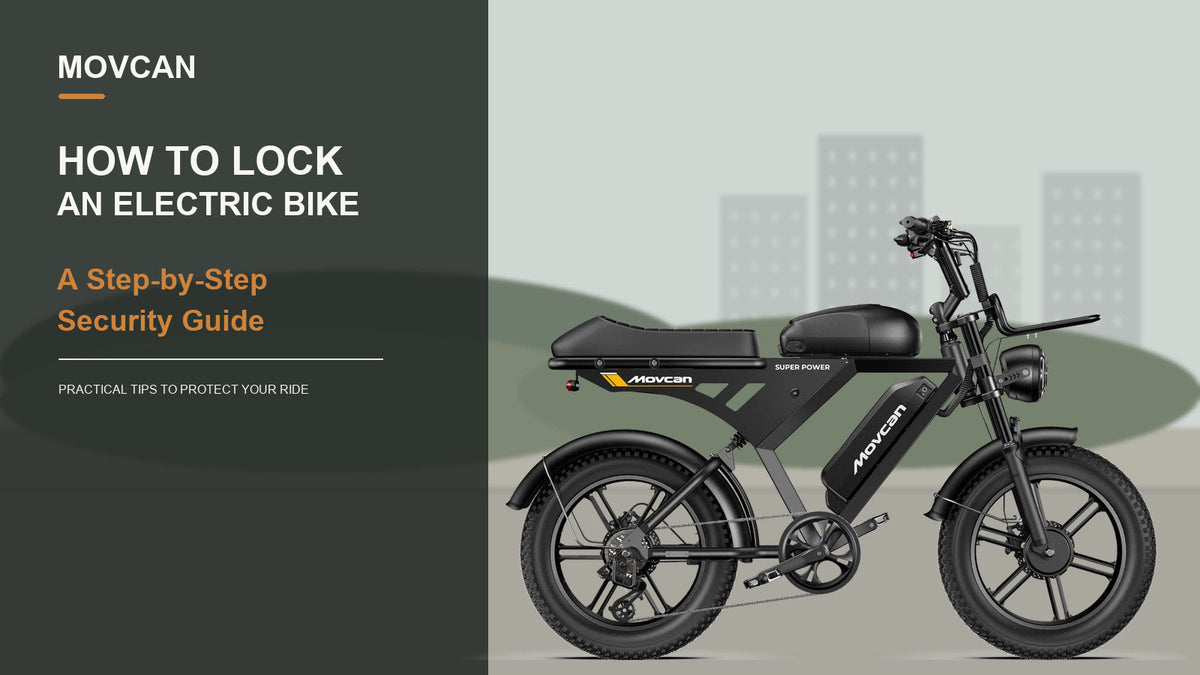
The best way to lock an electric bike is to secure the frame to a solid, immovable bike rack using a high-security U-lock or chain. Add a second lock for the other wheel, keep the locks off the ground, and take removable valuables with you. A good lock helps, but where and how you use it matters just as much.
E-bikes can be expensive to replace, and their batteries, displays, and accessories can attract attention even when the bike itself is locked. This guide explains a practical locking routine for daily commuting, shopping stops, and longer parking sessions. No locking method guarantees that a bicycle cannot be stolen, but a layered approach makes theft more difficult.
What Is the Best Way to Lock an Electric Bike?
For most riders, the strongest everyday approach combines a sturdy anchor point, a quality primary lock, and a secondary lock for the remaining wheel. Your primary lock must pass through a structural part of the frame, not just a wheel or a removable accessory.
A secure routine looks like this:
- Choose a firmly installed bike rack in a visible, permitted location.
- Check that the rack cannot be lifted, unbolted, or easily cut.
- Place the bike close to the rack so there is little empty space inside the lock.
- Pass a strong U-lock or chain around the main frame and rack; include the rear wheel if the lock fits without forcing anything.
- Secure the front wheel with a second lock, ideally connecting it to the frame or rack.
- Remove detachable valuables, check both locks, and photograph the parking location if helpful.
Do not lock only the front wheel. A thief could remove that wheel and take the rest of the bike.
Step 1: Choose a Secure Place to Park
A bicycle rack is useful only if it is properly attached to the ground or building. Give it a firm check before locking up. Avoid lightweight signposts, loose railings, trees that could be damaged, and objects that can be lifted over the top of your lock.
Prefer locations with pedestrian activity, lighting, and clear sight lines. A staffed bike room or secured locker may be better for long periods than an exposed street rack. Check local parking rules and never block sidewalks, ramps, entrances, or emergency access.
Visibility helps discourage opportunistic theft, but busy areas are not theft-proof. For an expensive e-bike, avoid leaving it in an isolated spot overnight, even if you have a strong lock.
Step 2: Use a Strong Primary Lock
U-locks
A hardened-steel U-lock is compact and can be difficult to defeat with basic hand tools. Choose a size that fits your frame and the rack closely. Oversized locks leave more room for tools and leverage.
A U-lock works particularly well when a frame tube sits near a narrow bike rack. Check that it closes fully and that the shackle is not resting on the ground.
Heavy-duty chain locks
A quality chain with a robust padlock can be easier to route around thick frames or awkward racks. Chains are usually heavier than U-locks, but their flexibility can be helpful on larger electric bikes.
Look for independent security testing and a lock rating suitable for the value of your bike and the area where you park. Follow your insurer's specific requirements if you have theft coverage. No rating means a lock is invulnerable.
Folding locks and cable locks
Folding locks are convenient to carry and may suit short stops, depending on their security rating. Thin cables are best used as secondary protection for a wheel or accessory, not as the only lock securing an expensive e-bike.
Step 3: Lock the Frame and Both Wheels
The frame is the most important part to secure. On a step-through e-bike, find a substantial frame section that the lock cannot simply slide off. Do not place the lock around cables, the battery handle, the seatpost alone, or a detachable rack.
If possible, use your primary lock to capture the frame and rear wheel together with the fixed rack. Use a second U-lock or chain for the front wheel. If your bike has quick-release wheels or components, consider approved security hardware or remove the vulnerable component when appropriate.
Keep locks clear of brake hoses, electrical wiring, spokes under tension, and delicate finishes. The lock should prevent removal without crushing or bending any part of the bicycle.
Step 4: Protect the Battery, Display, and Accessories
Some e-bikes have removable batteries or displays. If your model's instructions permit removal, taking these items with you during extended parking may reduce theft risk. Turn the bike off and follow the correct release procedure; do not force a battery or leave exposed connections vulnerable to rain.
Take detachable lights, phone mounts, bags, and other valuables with you. A locked battery is not necessarily protected against every form of tampering, and removing the battery does not replace the need to lock the frame.
For model-specific battery and accessory handling, consult the Movcan user manuals. You can also browse Movcan electric bike accessories and parts when looking for compatible equipment.
How to Lock an E-Bike for Different Parking Situations
A quick stop at a store
Even a short errand calls for a proper frame lock. Use a visible rack, secure the frame, and remove easily detached valuables. Do not rely on a kickstand or electronic power-off setting as theft protection.
Parking at work or school
If the bike stays in one place for hours, use two substantial locks when practical. Choose a monitored or access-controlled bike area if available. Keep a record of the lock model and any proof-of-purchase information required by your insurer.
Storing an e-bike at home
A garage or shared storage room is not automatically secure. Lock the bike to an installed ground or wall anchor rated for the purpose, and secure the room itself. Follow building and fire-safety rules for battery storage and charging.
Overnight or travel parking
Indoor, access-controlled storage is preferable. If you must park outdoors, avoid predictable locations and long unattended periods. A cover can reduce casual attention, but it should not trap moisture against the bike.
Common Electric Bike Locking Mistakes
- Locking only a wheel: the frame can be separated and taken.
- Using only a thin cable: cables may be easy to cut with portable tools.
- Choosing a weak anchor: a strong lock is useless if the rack can be removed.
- Leaving too much space inside the lock: this can give thieves room to work.
- Putting the lock on the ground: this can make certain attacks easier.
- Leaving the battery or accessories unsecured: removable parts may be stolen separately.
- Assuming an alarm or GPS tracker replaces a lock: these tools can supplement physical security, not substitute for it.
For a broader overview of theft prevention, read Movcan's guide to protecting your electric bike from theft.
Should You Use a GPS Tracker or E-Bike Alarm?
A motion alarm may draw attention to tampering, and a GPS tracker may help provide location information after a theft. Their effectiveness depends on battery life, connectivity, installation, and local conditions. They do not physically stop a thief from moving the bike.
If you use a tracker, keep its account information current and avoid confronting a suspected thief yourself. Share relevant information with local law enforcement instead. You can read more in the Movcan e-bike security systems guide.
What to Do If Your Electric Bike Is Stolen
Report the theft to the police and provide the serial number, photos, and purchase documentation. Notify your insurer promptly if you have coverage, and follow any reporting deadlines. Record identifying features and keep screenshots of relevant listings or tracking data, but do not attempt a personal recovery from a potentially dangerous situation.
Before a theft happens, photograph the bike from several angles and save its serial number somewhere separate from the bicycle. This simple preparation can make a police report and insurance claim easier.
Frequently Asked Questions
Can I lock an electric bike with a regular bike lock?
Yes, if the lock is large enough to fit the frame and rack and has an appropriate security rating. Because many e-bikes are valuable and heavy, a high-security U-lock or chain is generally a better primary choice than a basic cable lock.
Should I remove the battery when locking my e-bike?
For longer parking sessions, removing an approved removable battery may reduce the risk of battery theft. Follow your model's instructions and store the battery safely. Never force a battery out or expose electrical connections to moisture.
Is one U-lock enough for an electric bike?
One strong U-lock securing the frame to a reliable anchor is better than no lock, but a second lock helps protect the other wheel and adds another barrier to theft.
Where should I put a U-lock on an e-bike?
Pass it through a substantial part of the frame and around a fixed rack. Include the rear wheel if practical. Avoid cables, removable parts, or fragile components.
Can thieves steal an e-bike without its battery?
Yes. A bike can still be lifted, carried, or loaded into a vehicle without its battery. Battery removal is an extra precaution, not a replacement for physical locks.
Final Thoughts
Learning how to lock an electric bike is mostly about building a consistent habit. Choose a secure anchor, lock the frame, protect both wheels, and take removable valuables with you. Add an alarm, tracking, registration, or insurance if appropriate for your situation. A few extra seconds spent locking carefully can save a great deal of trouble later.