

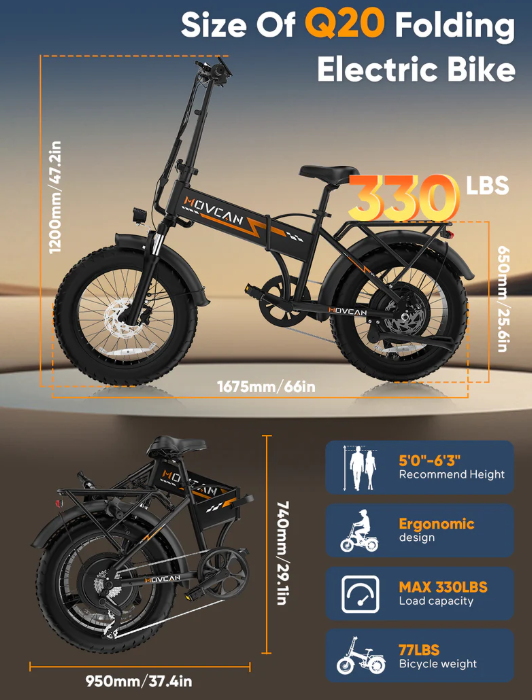
Electric bikes are heavier than traditional bicycles because they include additional components such as motors, batteries, controllers, suspension systems, and reinforced frames.
On average, most electric bikes weigh between 45 and 75 pounds, while performance-focused and fat tire eBikes can weigh 80 pounds or more due to larger motors, bigger batteries, and stronger frames.
Movcan electric bikes are designed for riders who prioritize power, stability, comfort, and long-distance performance. Depending on the model, Movcan eBikes typically weigh between 60 and 116 pounds, with heavier models offering more power, stronger frames, and enhanced off-road capability.
While a heavier eBike may require more effort to transport, the added weight often improves stability, durability, and riding confidence—especially for riders who need extra power for hills, trails, or heavier loads.
Quick Overview: Average eBike Weights
-
Standard eBikes: 45 to 75 lbs
-
Performance & Fat Tire eBikes: 80 to 120+ lbs (built for power, rugged terrain, and heavier loads)
-
Movcan Lineup Range: 60.6 to 116 lbs
💡 Key Takeaway: While a heavier eBike requires more effort to lift or transport, the added weight significantly improves riding stability, durability, and climbing power.
4 Primary Factors That Influence eBike Weight
Frame Material + Motor Power + Battery Capacity + Accessories = Total eBike Weight
1. Frame Material
The frame forms the structural core of the bike and directly influences payload capacity and durability.
|
Material |
Weight Profile |
Best For... |
Key Benefits |
|
Steel |
Heavier |
High-performance, off-road, heavy riders |
Superior durability, maximum strength, natural vibration absorption |
|
Aluminum |
Lightweight |
Urban commuting, daily recreational riding |
Rust-resistant, responsive handling, lower cost |
2. Motor Size & Output
Higher wattage and higher torque require larger, heavier motor casings.
-
500W Motors (7–10 lbs): Common on entry-level/commuter bikes; ideal for flat roads and modest inclines.
-
750W–1000W Motors (10–12 lbs): Balanced performance for faster acceleration and steep hill climbs.
-
1500W+ Motors (12–15+ lbs): Found on high-performance models (like off-road Movcan bikes); built for high speeds, rough terrain, and heavy payloads.
3. Battery Capacity
Most eBike batteries weigh between 7 and 15 lbs.
-
Smaller Batteries: Keep total weight down for short urban commutes.
-
Larger / Dual-Battery Systems: Add weight but provide long-distance range and consistent power delivery without frequent recharging.
4. Added Features & Accessories
Extra components enhance safety and comfort but incrementally add weight:
-
Wide fat tires (sand, snow, and gravel traction)
-
Full suspension systems (front fork + rear shock)
-
Hydraulic braking systems & reinforced rear cargo racks
eBike Categories & Weight Ranges
LIGHTWEIGHT COMMUTER FAT TIRE HIGH-PERFORMANCE
35 – 50 lbs 50 – 70 lbs 60 – 90+ lbs 80 – 120+ lbs
[Urban/Storage] [Balanced/Daily] [All-Terrain/Stable] [Max Power/Off-Road]
-
Lightweight eBikes (35–50 lbs): Best for carrying upstairs, apartment storage, and quick city transit.
-
Commuter eBikes (50–70 lbs): The sweet spot between range, daily comfort, and manageable portability.
-
Fat Tire eBikes (60–90+ lbs): Designed for extreme traction on dirt, sand, and snow.
-
High-Power Performance eBikes (80–120 lbs): Dual-motor or high-wattage machines built for maximum off-road capability.
Movcan eBike Weight Comparison Chart
|
Model |
Weight (lbs) |
Primary Best Use Case |
|
Movcan V80 |
60.6 lbs (Lightest) |
Portable, agile everyday commuting |
|
Movcan V70 |
80.0 lbs |
Comfortable all-around riding |
|
Movcan V60 Hydraulic |
82.7 lbs |
Stable adventure riding with enhanced stopping power |
|
Movcan V60 Pro |
84.7 lbs |
Off-road terrain & heavy-duty performance |
|
Movcan Q20 |
77.0 lbs |
Powerful folding design for travel/storage |
|
Movcan V30 |
89.0 lbs |
Powerful daily commuting |
|
Movcan V30 Max |
98.0 lbs |
Extended range & hill-climbing power |
|
Movcan V40 |
100.3 lbs |
Heavy-duty utility performance |
|
Movcan V30 Pro Max |
116.0 lbs (Heaviest) |
Maximum performance, dual-motor capability, & top stability |
Weight Trade-Offs: How Weight Affects Your Ride
Portability & Storage
-
Lighter bikes (<60 lbs): Easy to load onto standard car racks, carry up stairs, or park in tight office spaces.
-
Heavier bikes (>80 lbs): Require heavy-duty hitch racks or ramp systems for vehicle transport.
Ride Handling & Stability
-
Lightweight: Quick, agile steering; easy to maneuver around urban obstacles.
-
Heavier: Planted feel at high speeds, smoother ride over bumps, and superior rider confidence on rough trails.
FAQs
Are electric bikes hard to pedal without motor assistance?
Yes, but manageable. You can pedal any eBike with a dead battery, but heavier models require significantly more leg strength due to tire drag and overall frame weight. Using pedal-assist modes is recommended.
What is the best eBike weight for heavier riders?
A heavier bike (80–110+ lbs) is usually better. These models feature stronger steel/reinforced frames, higher payload capacities, and higher-torque motors designed to handle heavier loads effortlessly.
Is a lighter eBike always better?
Not necessarily. Lightweight bikes sacrifice battery capacity, motor power, and suspension comfort. Choose based on your priorities: select lightweight for transportability, or heavier for power, range, and stability.
FAQs
Q: How much does an electric bike weigh?
A: Most electric bikes weigh between 45 and 75 pounds, depending on the motor size, battery capacity, frame material, and included features. Lightweight commuter eBikes may weigh around 40–50 pounds, while fat tire and high-performance electric bikes can weigh 80 to 120 pounds or more.
Movcan electric bikes range from 60.6 lbs to 116 lbs, offering options for riders who want easier handling as well as riders who prioritize power, stability, and off-road performance.
Q: Why are electric bikes heavier than regular bikes?
A: Electric bikes are heavier because they include additional components that traditional bicycles do not have, including:
-
Electric motor
-
Rechargeable battery
-
Controller system
-
Stronger frame
-
Larger tires and suspension components
These extra parts add weight but provide benefits such as easier riding, higher speeds, longer range, and better climbing ability.
Q: Is a 70-pound electric bike too heavy?
A: A 70-pound electric bike is considered normal for many modern eBikes, especially fat tire and performance models. While it may be heavier to carry, the extra weight often improves stability, durability, and ride comfort.
For riders who frequently need to lift their bike into a car or carry it upstairs, a lighter model like the Movcan V80 (60.6 lbs) may be easier to handle.
Q: What is the average weight of a fat tire electric bike?
A: Most fat tire electric bikes weigh between 60 and 90 pounds. Models with larger motors, bigger batteries, full suspension, and reinforced frames can weigh over 100 pounds.
The additional weight helps fat tire eBikes provide better traction and stability on surfaces like gravel, sand, snow, and uneven trails.
Q: Are heavier electric bikes better?
A: Heavier electric bikes are not always better, but they often provide advantages in specific situations. A heavier eBike usually offers:
-
More powerful motors
-
Larger batteries
-
Better stability at higher speeds
-
Stronger frames
-
Improved off-road capability
For example, the Movcan V30 Pro Max (116 lbs) is designed for riders who want maximum power and performance, while lighter models are better suited for riders who prioritize portability.
Q: Can you ride an electric bike if the battery dies?
A: Yes, you can still pedal an electric bike without motor assistance. However, heavier eBikes require more effort because of their larger frames, motors, batteries, and tires.
Using pedal assist helps reduce the effort needed and makes heavier electric bikes easier to ride.
Q: How much does a Movcan electric bike weigh?
A: Movcan electric bikes have different weights depending on the model and performance level:
-
Movcan V80: 60.6 lbs
-
Movcan V60 Hydraulic Brake Version: 82.7 lbs
-
Movcan V60 Pro: 84.7 lbs
-
Movcan Q20 Folding eBike: 77 lbs
-
Movcan V30: 89 lbs
-
Movcan V30 Max: 98 lbs
-
Movcan V40: 100.31 lbs
-
Movcan V30 Pro Max: 116 lbs
The V80 is the lightest option for easier transportation, while the V30 Pro Max is built for riders seeking maximum power and stability.
Q: What is the lightest Movcan electric bike?
A: The Movcan V80 is one of the lightest Movcan electric bikes, weighing 60.6 pounds. It is a good choice for riders who want a balance between performance, comfort, and easier handling.