

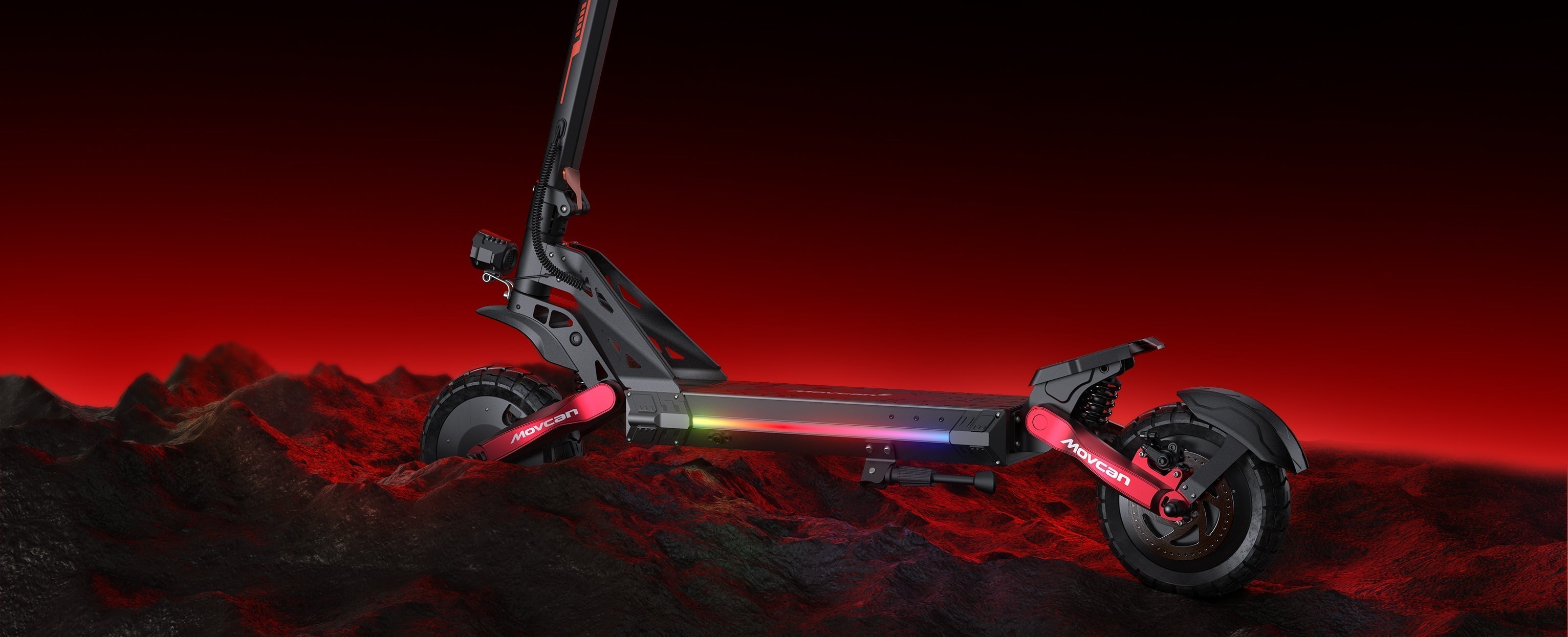
Electric bikes and electric scooters have officially cemented themselves as the top alternatives to traditional transportation. Affordable, efficient, and eco-friendly, they transform the daily grind of commuting into an enjoyable experience.
But when it's time to invest, the ultimate question remains: Which one is truly better for you?
The Short Answer: Neither option is universally superior. The right choice boils down to your lifestyle, daily mileage, and local terrain. Electric bikes dominate in range, comfort, and utility, while electric scooters win on portability, quick urban sprints, and storage convenience.
Here is a comprehensive breakdown to help you choose, featuring a head-to-head comparison of two premium 2026 models: the MOVCAN V30 Max E-Bike and the MOVCAN G100 Ultra E-Scooter.
Electric Bike vs. Scooter: Core Differences
Before diving into specific models, it helps to look at the fundamental design philosophy of each vehicle type:
-
Electric Bikes: Provide a traditional cycling experience equipped with a seat, larger wheels, pedal assistance, and substantial cargo options.
-
Electric Scooters: Offer a streamlined, standing riding experience built around a compact frame, agility, and rapid deployment.
Deep Dive: Electric Bikes

The Advantages
-
Massive Range for Commuting & Adventure: Thanks to larger frames that house dual-battery systems and efficiency-boosting pedal assist (PAS) technology, e-bikes can easily cover 70+ miles in pure electric mode and 100+ miles with pedal assist.
-
Superior Comfort and Stability: E-bikes feature a natural seated position and larger diameter wheels that inherently provide better balance. Fat-tire variants excel at smoothing out rough surfaces like gravel, dirt, sand, and pothole-ridden city streets.
-
Unmatched Utility & Versatility: From grocery runs to weekend camping trips, e-bikes can carry heavy cargo. Most models easily support rear racks, front baskets, and cargo trailers, making them genuine car replacements.
The Disadvantages
-
Bulk & Weight: E-bikes are significantly heavier and larger, making them difficult to carry up flights of stairs or squeeze onto crowded public transit.
-
Higher Entry Cost: Due to complex drivetrains, larger battery capacities, and robust frames, high-quality e-bikes generally require a larger upfront investment.
Deep Dive: Electric Scooters

The Advantages
-
Ultimate Portability & Storage: Scooters are the undisputed champions of the "last-mile" commute. They fold down in seconds, fitting effortlessly under office desks, inside small apartment closets, or in the trunk of a compact car.
-
Perfect for Nimble Urban Commutes: Navigating heavy city traffic or sprawling college campuses is a breeze on a scooter. They require zero parking hassle and can bypass gridlock with ease.
-
Thrilling High-End Performance: Modern premium scooters are no longer toys. With the introduction of dual motors and hydraulic brakes, high-performance variants offer blistering acceleration and impressive top speeds.
The Disadvantages
-
Fatigue on Longer Rides: Standing for the entirety of a long commute can become tiring.
-
Sensitivity to Road Hazards: Smaller wheels mean that potholes, bumps, and debris are felt much more acutely, reducing overall stability on poorly maintained roads.
-
Minimal Cargo Capacity: Scooters are built for personal transport; they lack the framework to carry groceries or heavy gear safely.
Head-to-Head: MOVCAN V30 Max vs. MOVCAN G100 Ultra
To see how these differences play out in the real world, let’s look at two flagship options from MOVCAN.
1. MOVCAN V30 Max Electric Bike (Built for Range & Adventure)
The MOVCAN V30 Max is a powerhouse designed for riders who refuse to compromise on distance or terrain capability.
-
Who it’s for: Heavy commuters, weekend trail blazes, and anyone looking to replace car trips.
-
Why it stands out: The dual 48V 15.6Ah battery setup mitigates range anxiety entirely by delivering up to 120 miles of pedal-assisted riding. Coupled with 20x4.0" fat tires and a full suspension system, it glides over rough terrain while keeping the rider perfectly comfortable.
2. MOVCAN G100 Ultra Electric Scooter (Built for Speed & Mobility)
The MOVCAN G100 Ultra redefines urban agility, prioritizing high-speed performance and ultra-compact convenience.
-
Who it’s for: Apartment dwellers, city slickers, and thrill-seekers looking for rapid transit.
-
Why it stands out: Packing dual 800W motors (1600W peak), this scooter clocks a fierce 37.5 MPH top speed. Despite its raw power, it remains an easily parkable, foldable urban tool featuring high-grade dual hydraulic brakes and IPX5 water resistance for peace-of-mind city riding.
Side-by-Side Spec Comparison
|
Feature |
MOVCAN V30 Max (E-Bike) |
MOVCAN G100 Ultra (Scooter) |
|
Vehicle Type |
Electric Bike |
Electric Scooter |
|
Motor Power |
1500W (Peak 2000W) |
Dual 800W (Peak 1600W) |
|
Top Speed |
32 MPH |
37.5 MPH |
|
Battery Configuration |
Dual 48V 15.6Ah |
52V 25Ah |
|
Max Range |
Up to 120 Miles (PAS) / 75 Miles (Eco) |
Variable (High-capacity urban range) |
|
Suspension |
Full Suspension |
Front & Rear Dual Suspension |
|
Brakes |
Hydraulic Disc Brakes |
Dual Hydraulic Brakes |
|
Tires |
20×4.0" Fat Tires |
10×3.0" All-Terrain Tires |
|
Riding Position |
Seated (Relaxed) |
Standing (Active) |
|
Cargo Capacity |
Excellent (Racks & Baskets supported) |
Limited |
|
Portability |
Moderate |
Excellent (Foldable) |
The Verdict: Which One Fits Your Lifestyle?
The choice between an electric bike and an electric scooter comes down to your lifestyle.
The MOVCAN V30 Max is the better choice for riders who need range, comfort, and versatility. It is built for longer commutes, outdoor adventures, and riders who want a practical transportation replacement.
The MOVCAN G100 Ultra is the better choice for riders who value speed, portability, and urban convenience. It is perfect for city riders who need a compact and powerful transportation option.
Simply put:
The V30 Max is built to replace longer car trips.
The G100 Ultra is built to make short city trips faster and easier.
Both provide an efficient and enjoyable way to ride — the best choice depends on where your journey takes you.
FAQ
Q1: Do I need a license or insurance to ride an e-bike or e-scooter in 2026?
A: In most regions (including the US and EU), you do not need a driver's license, registration, or insurance, provided the vehicle complies with local speed and power limits.
-
For E-Bikes: Models like the MOVCAN V30 Max typically fit into Class 3 categories or general local e-bike classifications depending on your settings and speed limits.
-
For E-Scooters: High-performance scooters like the G100 Ultra that exceed 30 MPH are often restricted to private property or specific bike lanes depending on city ordinances. Always check your municipal laws regarding speed limits on public roads.
Q2: Can I ride these in the rain?
A: Yes, but within limits. The MOVCAN G100 Ultra features an IPX5 water-resistance rating, meaning it can handle splashes and light-to-moderate rain easily. However, neither e-bikes nor e-scooters are 100% waterproof. You should avoid heavy downpours, deep puddles, or using high-pressure washers, as water submersion can damage the battery and electrical components.
Q3: How long do the batteries last before they need to be replaced?
A: Modern lithium-ion batteries used in premium e-bikes and scooters typically last between 500 to 800 full charge cycles before their capacity drops to about 80% of its original state. For the average commuter, this translates to roughly 3 to 5 years of reliable daily riding. To maximize lifespan, avoid letting your battery drain completely to 0% and store it in a temperature-controlled indoor environment.
Q4: E-Bike vs. Scooter: Which one is safer for daily commuting?
A: Generally, electric bikes offer higher inherent stability and safety due to their larger wheels (like the 20-inch tires on the V30 Max), longer wheelbase, and seated center of gravity. Larger tires roll over potholes and road debris much more easily. While scooters like the G100 Ultra feature advanced dual suspension to mitigate road hazards, their smaller 10-inch wheels require more active attention and quicker reaction times from the rider when navigating uneven pavement.
Q5: Is it easy to find replacement parts or get maintenance done?
A: Yes. Since both models utilize high-grade, standard components—such as Shimano gear systems on the V30 Max and standard hydraulic disc brakes on both—basic maintenance like brake pad replacements or tire changes can be done at home or at any local bike repair shop.