

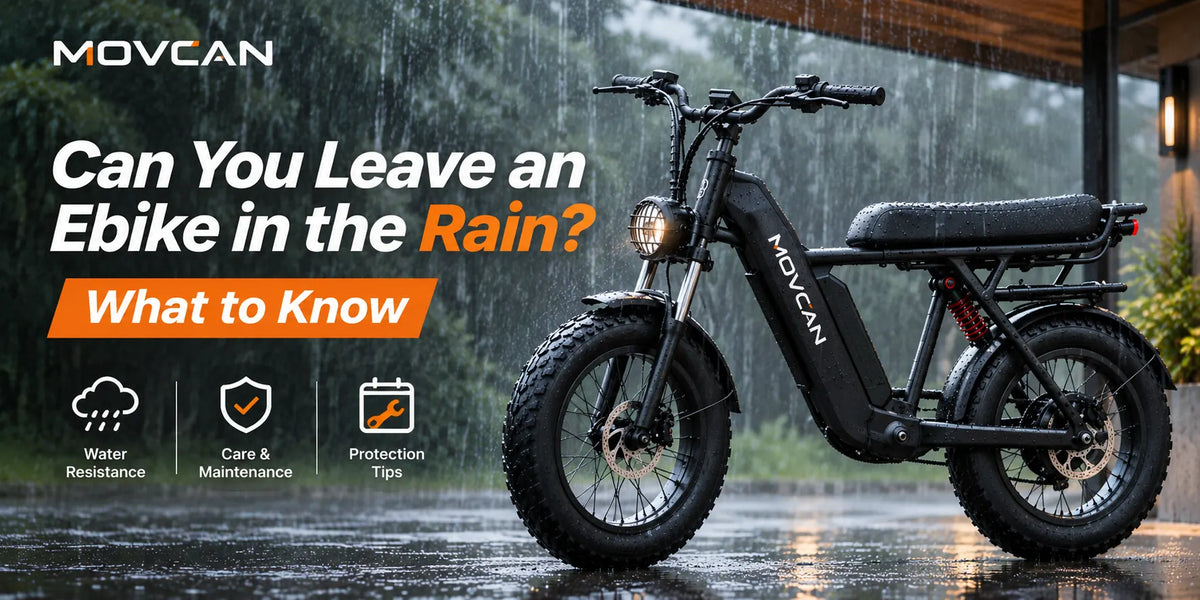
Yes, you can leave an ebike in the rain for a short stretch, like a workday or an errand, and it will almost always be fine. Leaving it out night after night is a different story. Ebikes are built to get wet while you ride. They aren't built to sit in a downpour for days. Here's where the line sits and how to stay on the right side of it.
Is it okay to leave an ebike out in the rain?
For short periods, yes. Most ebikes are water-resistant, not waterproof. That means rain and splashes are part of the plan, but long soaking and submersion aren't. One ebike maker, Gazelle, says leaving a bike outside in the rain every once in a while isn't the end of the world, though it recommends parking under cover whenever you can.
Riders back this up. In one online Q&A thread, commuters in the Netherlands, where it rains a lot, said they park outside all the time and haven't seen bikes get damaged. One rider said they've commuted in all weather for years with no problems. But another person in the same thread described a colleague whose bike, brought from a drier country, started acting up after rain. The manufacturer said it wasn't meant for constant rain.
So the honest answer is "it depends on the bike and how often." A bike built for rainy climates handles a wet parking spot far better than a budget model with thin seals. If you're unsure, ask the manufacturer for the water rating of the motor, battery, and display.
What rain actually does to an ebike
Water causes trouble in three places.
The battery and its contacts. The battery is the most sensitive part. Most cases are sealed, but moisture can collect around the contact points and cause a short or slow corrosion. The risk goes up if the bike sits wet for hours.
The display, controller, and wiring. Rubber seals do a good job against rain and splashes. Bosch systems, for example, are rated IPX5, which an Australian shop called EBB describes as protection from splashing and light hosing, but not from submersion. Heavy or repeated rain can still work its way past a seal over time.
The chain, bolts, and brake rotors. This is the slow damage. Steel rusts, and a bike that never dries out will start showing it. One Seattle rider in a forum thread put it well: the drizzle isn't the issue, it's not being able to dry things out for days. They saw rusty spots on non-aluminum parts when bikes stayed damp.
Here's a real-world example from the same forum. A rider's kitted bike sat in about 40 minutes of heavy rain outside a restaurant. When the rain stopped, the bike wouldn't turn on, even with half a charge. They rode home unassisted, dried everything thoroughly, charged it, and it worked fine for the next four months. That's one story, not a guarantee. But it shows why drying matters more than panic.
The voltage in these systems is low, so you won't get shocked. The real risk is to your wallet: corrosion and shorts are what kill a battery or controller.
How to protect a parked ebike
You can't always bring your bike inside. Fair enough. Here's what we'd do depending on the situation.
|
Situation |
What helps |
|---|---|
|
A few hours at work or the store |
Park under any overhang, take the battery with you |
|
Overnight outdoors, now and then |
Waterproof cover, battery inside, wipe down in the morning |
|
Regular outdoor storage |
Covered shed or locker, cover as backup, a dry-out routine |
|
Flood risk or standing water |
Move it. Never leave it where it could be submerged |
A few habits make the biggest difference:
-
Take the battery inside when you park in bad weather. It protects the most expensive part. If the exposed contacts on the bike will sit in rain, cover them with something waterproof. A secured plastic bag works in a pinch, and a neoprene cover is better if it happens often.
-
Use a waterproof cover, and make sure it says waterproof, not just dustproof. It won't replace a shed, but it keeps rain and grit off. Covers can be a hassle to put on and dry out every day, so be honest about whether you'll use it.
-
Skip the pressure washer. Seals on hubs and bearings aren't made for fast water streams. If you rinse the bike, use a gentle spray, keep a good distance, and stay away from the motor, battery, display, and charging port.
-
Charge indoors only. Most chargers aren't designed for outdoor use.
We build Movcan e-bikes for everyday city riding and test them in real conditions, such as Movcan V30-1500W Fat Tire Electric Bike with Dual Battery, and we still follow these habits with our own bikes. No ebike likes sitting wet for days.
What to do after a soaking
If your bike did get drenched, don't rush to plug it in. A few minutes of care now saves repairs later.
Wipe the whole bike down with a dry cloth as soon as you're home. Pull the battery and dry its terminals and the spot where it sits. If you think water reached the contacts, leave the battery out for a few hours so everything can dry. Then let the bike sit overnight before charging. Also give the battery a rest after a wet ride; one rider in the Q&A thread suggested letting it dry indoors for an hour or two before charging.
Check the chain, too. Wipe it and re-lube it with a wet-style lube if it's squeaking or looks dull. A well-oiled chain holds up fine through regular rain, while a dry one will rust from the inside.
If the bike won't power on after rain, don't keep pressing the button. Turn it off, remove the battery, and let it dry fully. If the battery was under water, or the bike still acts up after a full day of drying, contact the manufacturer or a shop. We'd rather you ask than guess.
Conclusion
So, can you leave an ebike in the rain? Briefly, yes. A work shift or a short stop won't hurt a decently built bike. Repeated soaking, long exposure, and any kind of submersion will. A few simple steps cover most of the risk: pull the battery, use a waterproof cover, dry the bike afterward, and keep water away from bearings and contacts. When in doubt, check the manual or ask the maker about the ratings for your specific model.
FAQs
Is it okay if an ebike gets rained on?
Yes. Ebikes are designed to handle rain while you ride and during short parking stops. Trouble starts when a bike stays wet for long periods or sits in heavy downpours. Dry it off afterward, especially around the battery area and contacts, and it should stay in good shape.
What happens if an ebike battery gets wet?
Most batteries sit in sealed cases, so a little rain usually isn't a problem. If water gets inside or lingers on the contacts, it can cause a short circuit or corrosion and may permanently damage the battery. Remove it, dry it, and wait before charging.
Are ebikes fully waterproof?
No. Most are water-resistant, which covers rain and splashes but not submersion. Check the IP rating if the maker lists one. Avoid deep puddles and floodwater that could cover the motor or battery, and never leave a bike in standing water.
Can I ride my electric bike in the rain?
Yes, in normal rain. Ride slower, brake earlier, and watch for slick spots like painted lines and metal covers. Afterward, wipe the bike down, dry the battery area, and re-lube the chain if needed.