

For many e-bike owners, one question comes up after hearing about lithium-ion battery fires:
Can an e-bike battery catch fire when it is not charging?
The honest answer is yes, it is possible—but it is not something that normally happens with a properly manufactured, undamaged, and properly maintained e-bike battery.
Most people associate battery fires with charging because charging is a period when the battery is actively receiving electrical energy. However, a lithium-ion battery stores a significant amount of energy even when the charger is disconnected. If a battery has a serious internal defect, physical damage, water intrusion, or another failure that creates an internal short circuit, overheating can occur even when the bike is parked and not charging.
This is not just a theoretical possibility. The U.S. Consumer Product Safety Commission (CPSC) has reported e-bike battery fires involving batteries that were not charging, not in use, or in storage.
The good news is that there are meaningful ways to reduce this risk. Battery quality, proper certification, battery management systems, correct chargers, and responsible storage all matter.
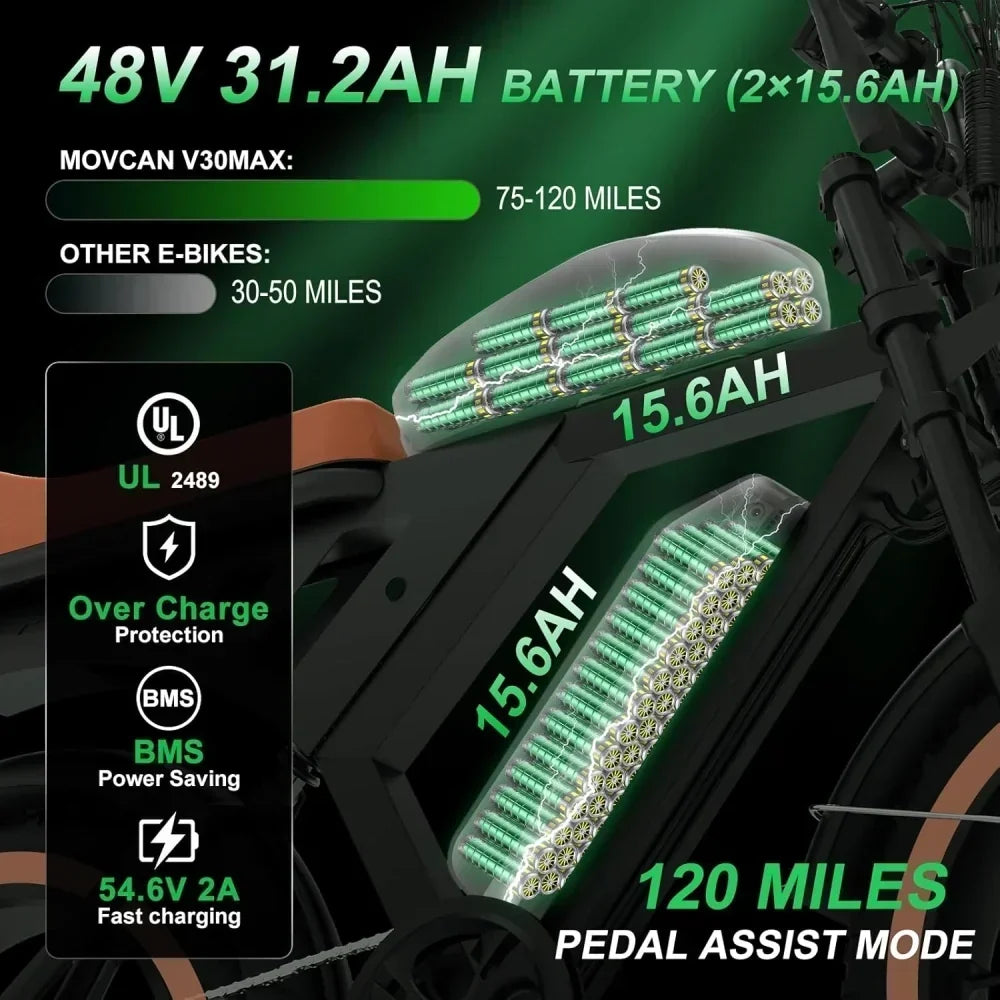
For Movcan riders, all Movcan e-bikes use UL 2849-certified battery systems, according to Movcan's official product and safety information. UL certification is an important part of a safer e-bike design, although no lithium-ion battery can honestly be described as completely fire-proof.
Can an E-Bike Battery Catch Fire When It Is Not Charging?

Yes, but the circumstances matter.
An e-bike battery does not stop containing energy simply because the charger has been unplugged.
Lithium-ion batteries contain multiple cells connected together inside a battery pack. The pack also contains electrical components designed to control charging, discharging, temperature, and other operating conditions.
When everything is functioning normally, the battery can sit unused for long periods without creating a fire hazard.
The concern arises when something goes seriously wrong inside the battery.
For example, an internal short circuit can cause a battery cell to heat up. If the temperature becomes high enough, it can trigger a chain reaction known as thermal runaway, in which one damaged cell generates enough heat to affect neighboring cells.
That means a battery fire does not necessarily require the battery to be plugged into a charger at that exact moment.
CPSC has specifically documented cases where certain defective e-bike batteries ignited while the batteries were not charging and the bikes were not being used. In a November 2025 warning concerning certain Rad Power Bikes batteries, CPSC said some reported fires occurred while the batteries were in storage.
So the accurate answer is:
An e-bike battery can catch fire while not charging, but a properly designed and maintained battery should make this an uncommon event.
Why Can a Battery Catch Fire When It Isn't Charging?
Several factors can contribute to a lithium-ion battery fire.
1. Internal battery defects
Battery cells are manufactured to strict specifications, but defective cells or defects within a battery pack can create dangerous conditions.
A damaged cell may develop an internal short circuit. Because the battery is still storing energy, that stored energy can potentially be released rapidly as heat.
This is one reason battery quality and safety testing are important when choosing an e-bike.
2. Physical damage
An e-bike battery can experience significant vibration and impact during normal riding.
A crash, drop, crushing force, or other severe impact can damage the battery housing or individual cells.
Sometimes the damage is immediately obvious. Sometimes it isn't.
A battery that has been severely damaged should not simply be put back on the charger and used normally. It should be inspected according to the manufacturer's safety procedures.
3. Water or moisture intrusion
Water is another reason battery condition matters.
If water or debris enters an electrical connection or damaged battery enclosure, it can contribute to corrosion, electrical faults, or short circuits.
CPSC has previously warned about e-bike batteries where exposure to water and debris was associated with unexpected ignition.
This doesn't mean that every e-bike exposed to rain is dangerous. It means riders should avoid using a battery that has been physically damaged or shows signs of water intrusion.
4. Poor-quality or improperly designed batteries
Not all e-bike batteries are built to the same safety standards.
A battery pack is much more than a collection of lithium-ion cells. It also depends on electrical protection, battery management, wiring, connectors, enclosure design, manufacturing quality, and compatibility between the battery, charger, and e-bike.
CPSC has issued multiple warnings involving defective or uncertified e-bike batteries. In one 2024 warning involving Unit Pack Power batteries, CPSC said the affected batteries had not been certified by an accredited laboratory to the applicable UL safety standard.
This is one reason consumers should be cautious about generic replacement batteries or batteries from unknown manufacturers.
5. Incorrect replacement chargers or batteries
Using the wrong charger can create an unnecessary safety risk.
The charger needs to be compatible with the battery's voltage, charging specifications, and electrical protection system.
UL Solutions also emphasizes that e-bike chargers need to be compatible with the battery and intended for use with the specific e-bike system.
For that reason, use the charger supplied by the manufacturer or an officially approved replacement.
Does UL Certification Make an E-Bike Battery Safe?

This is an important question because consumers sometimes misunderstand what "UL certified" means.
UL certification is a major safety factor—but it does not mean "impossible to catch fire."
UL certification means a product has been evaluated against applicable safety requirements through an accredited certification process.
For e-bikes, UL 2849 addresses the electrical systems of electrically powered bicycles. UL Solutions also explains that UL 2271 is a relevant standard for batteries used in light electric vehicles. The standards cover areas such as construction, components, critical safety circuits, testing, markings, and instructions.
In other words, certification is very different from simply saying that a battery was "tested."
Testing a product to some requirements does not automatically make it certified. UL Solutions specifically notes that testing to a UL standard is not the same as certification.
What about Movcan batteries?
Movcan states that its e-bike battery systems meet UL 2849 certification standards, and Movcan product pages identify UL 2849-certified battery systems on current models.
That certification provides an important additional layer of safety assurance compared with using an unknown, modified, or uncertified battery system.
However, certification should be viewed correctly:
UL certification significantly improves confidence in the product's design and electrical safety, but it does not make a lithium-ion battery physically indestructible or completely fire-proof.
A certified battery can still be damaged by a severe crash, improper modification, misuse, or other unusual circumstances.
How Likely Is a Non-Charging E-Bike Battery Fire?
For a normal rider using a properly manufactured battery, it is reasonable to consider a fire while the battery is simply sitting unused to be uncommon.
There is no responsible way to promise customers that the probability is zero.
Lithium-ion battery fires are real safety events, and CPSC continues to issue warnings and recalls involving defective e-bike batteries.
At the same time, headlines about battery fires can make it sound as if every e-bike battery is constantly at risk. That is also misleading.
The important distinction is between:
a properly manufactured, certified, undamaged battery
and
a defective, damaged, modified, poorly maintained, or uncertified battery.
Battery safety starts with the product itself and continues with how the owner uses it.
Warning Signs You Should Never Ignore
Whether your e-bike is charging or sitting in the garage, pay attention to unusual changes in the battery.
Stop using the battery and contact the manufacturer or a qualified service professional if you notice:
-
Significant swelling or deformation
-
A cracked or badly damaged battery enclosure
-
Unusual overheating
-
Burning, chemical, or unusual odors
-
Smoke or vapor
-
Popping, hissing, or unusual sounds
-
Visible sparks
-
Sudden changes in charging behavior
-
A battery that has suffered a serious crash or impact
A battery showing these symptoms should not be treated as normal.
Do not continue charging a battery that is visibly damaged, swollen, smoking, or behaving abnormally.
How Should You Store an E-Bike Battery?
Good storage habits can further reduce unnecessary risk.
Keep your battery in a cool, dry location away from direct sunlight and sources of extreme heat.
Avoid storing an e-bike battery immediately next to highly flammable materials.
If the battery has been involved in a serious crash or has visible physical damage, do not assume it is safe simply because the bike still turns on.
It is also a good idea to follow the battery manufacturer's storage and charging instructions rather than relying on general rules found online.
Should You Charge an E-Bike Battery Overnight?
The safest approach is not to charge an e-bike battery while you are asleep or away from home.
CPSC specifically recommends being present while charging micromobility products and advises consumers not to charge them while sleeping or when they are away from home.
This recommendation applies even when a battery has multiple safety protections.
A certified battery and an appropriate charger reduce risk, but responsible charging practices are still important.
What Should You Do If Your E-Bike Battery Starts Smoking?
Treat smoke, intense heat, popping, or other signs of battery failure as a serious situation.
Do not touch a battery that is rapidly heating, smoking, or burning.
Move away from the area and keep other people away. Call emergency services when appropriate and follow local fire-safety guidance.
Do not attempt to open, repair, puncture, or disassemble a damaged lithium-ion battery yourself.
After a serious battery incident, do not place the damaged battery in normal household trash or curbside recycling. CPSC recommends following local hazardous-waste procedures for affected lithium-ion batteries.
What Makes Movcan E-Bike Batteries Different?
Battery safety isn't just about capacity or riding range.
A 48V 15.6Ah or 48V 20Ah battery contains a substantial amount of stored energy, so the quality of the complete electrical system matters.
Movcan states that its e-bike battery systems meet UL 2849 certification standards and incorporate battery management and electrical safety features designed as part of the overall e-bike system.
That's important because consumers should not evaluate an e-bike battery based only on:
"How many amp-hours does it have?"
A better set of questions is:
Is the battery properly certified?
Is the charger designed for the battery?
Does the battery have appropriate protection electronics?
Is the battery physically protected?
Is the system designed and manufactured as a complete e-bike?
These factors matter just as much as range and capacity when you're thinking about long-term ownership.
The Bottom Line
So, can an e-bike battery catch fire when it is not charging?
Yes, it is possible. But that does not mean a normal, properly maintained e-bike battery is likely to suddenly catch fire while sitting unused.
The documented incidents involving non-charging batteries generally involve specific hazards such as defective batteries, damaged components, water or debris exposure, or other safety problems. CPSC has issued warnings involving batteries that ignited while not charging or while in storage, which is why consumers should take battery safety seriously.
The best way to reduce risk is to start with a properly manufactured and certified e-bike, use the manufacturer's charger, avoid damaged or modified batteries, store the battery properly, and pay attention to warning signs.
For Movcan riders, the company states that its e-bike battery systems meet UL 2849 certification standards, providing an important layer of independently evaluated electrical safety.
No lithium-ion battery should be described as 100% fire-proof. But choosing a properly certified system such as Movcan and following basic battery safety practices can significantly reduce avoidable risks.
FAQs
Can an e-bike battery catch fire overnight when it isn't charging?
It is possible, but uncommon with a properly manufactured and undamaged battery. CPSC has documented specific e-bike battery fires that occurred while batteries were in storage or not charging, which is why battery condition and certification matter.
Should I remove my e-bike battery when I am not riding?
Not necessarily. Follow your manufacturer's storage recommendations. The more important factors are storing the battery in a suitable environment, avoiding extreme heat and moisture, and not using a battery that is damaged or showing abnormal behavior.
Does UL certification prevent battery fires?
No certification can honestly guarantee that a lithium-ion battery will never fail. UL certification indicates that the product has been evaluated against applicable safety requirements. It provides an important layer of safety assurance, but proper use and maintenance are still necessary.
Are Movcan e-bike batteries UL certified?
Movcan states that its e-bike battery systems meet UL 2849 certification standards, and current Movcan product and safety pages identify UL 2849-certified battery systems.
Is it safe to use a third-party e-bike battery?
A battery should only be replaced with a battery that is specifically compatible with the e-bike and approved by the manufacturer. CPSC recommends using replacement or secondary battery packs that have been tested and approved for safe use with the specific device.
What should I do if my battery is swollen?
Stop using it and do not charge it. Do not attempt to open or repair the battery yourself. Contact the manufacturer or an appropriately qualified service provider for instructions on safe handling and disposal.
Can rain cause an e-bike battery fire?
Normal exposure to weather does not automatically mean a battery will catch fire. However, damaged seals, connectors, wiring, or battery housings can allow water or debris to contribute to electrical problems. Any battery suspected of water intrusion or physical damage should be inspected before continued use. CPSC has documented fire hazards associated with certain batteries exposed to water and debris.